Foundation only
This module prepares you to begin approved EMT education. It does not provide certification, course credit, local protocols, medical direction, or authorization to perform patient care.
Learning objectives
- Explain the central concepts in plain language.
- Recognize common terms, observations, or equipment connected to the topic.
- Identify what must be learned later from an approved instructor.
- Complete the guided practice station, applied activity, and lesson-specific knowledge check.
1. Patient-centered introductions
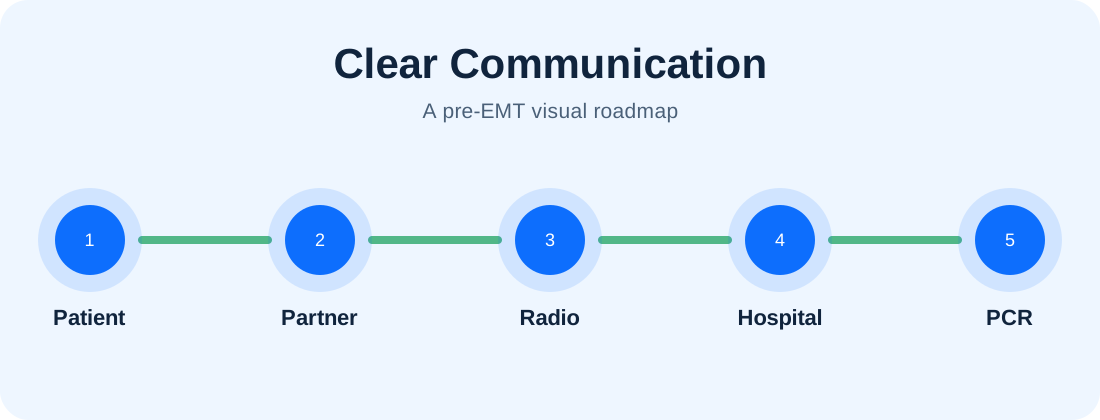
Introduce yourself and your role, explain what you are doing, ask permission when appropriate, preserve dignity, and use understandable language. Listen without interrupting, acknowledge concerns, and avoid promising outcomes. Use qualified interpreter resources when required rather than relying on children or bystanders for complex medical communication.
2. Team communication
Closed-loop communication means an instruction is directed, repeated back, completed, and confirmed. Speak up about hazards, changes, missing equipment, or uncertainty. Respectful clarification is safer than silent confusion. A good teammate communicates workload and helps without taking over every task.
3. Radio and hospital reports
A basic report identifies the unit, patient age category, chief concern, important history, assessment findings, vital trends, treatment, response, and estimated arrival. The order may vary locally. Practice delivering the important information in under a minute, then answer questions.
4. Objective documentation
Separate patient statements, witness statements, and your observations. Replace judgmental labels with observable behavior. “Uncooperative” may become “patient repeatedly pulled away and declined assessment after risks were explained.” Avoid unsupported conclusions and document changes over time.
5. Professionalism in difficult moments
Privacy, respectful language, appropriate social media use, honesty, punctuality, preparation, and receiving feedback all matter. Professionalism does not mean never feeling stress; it means managing behavior, asking for help, and protecting the patient even when a scene is frustrating.
Put the lesson into practice
Record yourself giving a 45-second fictional handoff. Listen once for missing facts and once for vague or judgmental wording.
Check your understanding
This is a readiness check, not a certification exam.
Helpful links and practice tools
PCR Narrative Coach
Open tool →First 100 Shifts
Open tool →Mark this module complete when ready
You should be able to summarize the lesson without reading it word-for-word and identify at least one area to revisit.