Foundation only
This module prepares you to begin approved EMT education. It does not provide certification, course credit, local protocols, medical direction, or authorization to perform patient care.
Learning objectives
- Explain the central concepts in plain language.
- Recognize common terms, observations, or equipment connected to the topic.
- Identify what must be learned later from an approved instructor.
- Complete the guided practice station, applied activity, and lesson-specific knowledge check.
1. Assessment is a repeating process
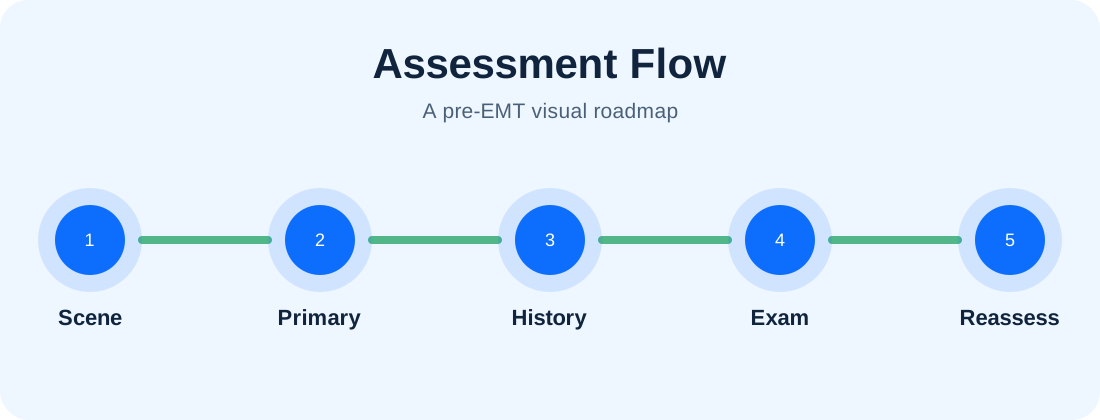
A useful mental map is scene size-up, primary assessment, history, focused or secondary assessment, vital signs, treatment, reassessment, handoff, and documentation. The process loops whenever the patient changes. Immediate threats are managed as they are found rather than postponed for a perfect checklist.
2. Scene size-up
Look for hazards, appropriate protective equipment, mechanism of injury or nature of illness, number of patients, need for extra resources, and clues in the environment. Scene safety is dynamic. A calm scene can become unsafe, and an apparently minor call can involve more patients or hazards than dispatch reported.
3. Primary assessment
Form a general impression, assess mental status, airway, breathing, circulation, major bleeding, and immediate threats. Decide whether the patient appears stable or time-sensitive and whether transport or additional resources should be accelerated. Your approved program will teach its exact sequence and terminology.
4. History and focused assessment
SAMPLE organizes symptoms, allergies, medications, pertinent history, last oral intake, and events. OPQRST explores onset, provocation/palliation, quality, region/radiation, severity, and time. Physical assessment uses inspection, palpation, auscultation where appropriate, comparisons, and relevant positives and negatives.
5. Reassessment and handoff
Reassessment confirms whether the patient changed and whether interventions helped, failed, or caused problems. A handoff should identify the patient, chief concern, important history, assessment findings, vital trends, treatment, response, and remaining concerns. Good reports are concise but not empty.
Put the lesson into practice
Use the fictional complaint “difficulty breathing.” Write your first five observations or questions and label each as scene, primary, history, or focused assessment.
Check your understanding
This is a readiness check, not a certification exam.
Helpful links and practice tools
Mark this module complete when ready
You should be able to summarize the lesson without reading it word-for-word and identify at least one area to revisit.