Foundation only
This module prepares you to begin approved EMT education. It does not provide certification, course credit, local protocols, medical direction, or authorization to perform patient care.
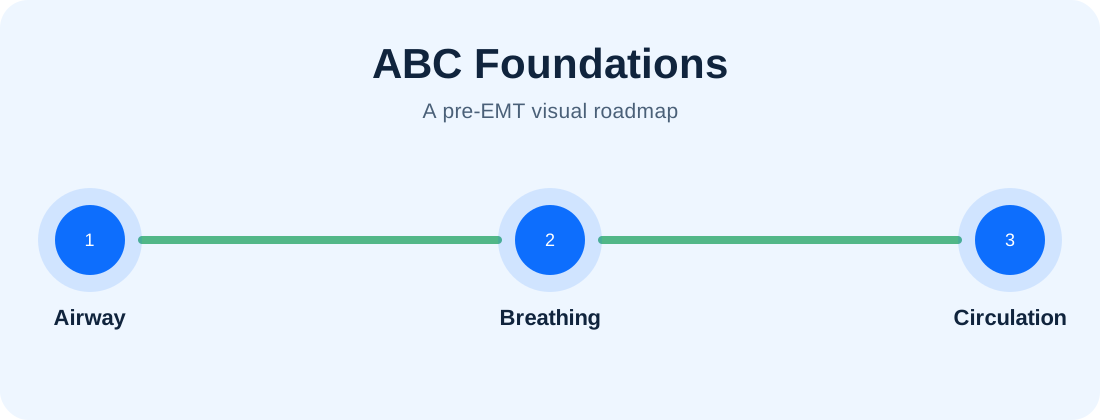
Learning objectives
- Explain the central concepts in plain language.
- Recognize common terms, observations, or equipment connected to the topic.
- Identify what must be learned later from an approved instructor.
- Complete the guided practice station, applied activity, and lesson-specific knowledge check.
1. Airway patency
A patent airway allows air to move. Airway compromise may involve the tongue, secretions, vomit, blood, swelling, trauma, or foreign material. Warning signs include inability to speak normally, abnormal sounds, visible obstruction, altered mental status, and ineffective air movement. EMT courses teach positioning, suction, adjuncts, and escalation within scope.
2. Ventilation and oxygenation
Ventilation is moving air into and out of the lungs. Oxygenation is delivering oxygen to blood and tissues. A patient may have a good saturation but poor ventilation, or visible breathing effort despite a temporarily acceptable number. Rate, depth, chest rise, mental status, skin, speech, and fatigue matter.
3. Basic equipment concepts
Recognize the bag-valve mask, oxygen cylinder and regulator, nasal cannula, nonrebreather mask, suction unit and catheter, oropharyngeal airway, and nasopharyngeal airway. Before class, focus on names, purpose, basic components, and safety—not unsupervised insertion or treatment practice.
4. Circulation, bleeding, and perfusion
Circulation includes pulse, blood pressure, skin, mental status, and evidence of perfusion. Major external bleeding can threaten life quickly. EMT students will learn direct pressure, wound packing where authorized, pressure dressings, and tourniquets. Shock broadly means inadequate tissue perfusion and can exist before blood pressure falls.
5. Connect ABC findings
Airway, breathing, and circulation affect one another. Airway obstruction reduces ventilation; inadequate ventilation affects oxygenation and carbon dioxide; poor circulation reduces oxygen delivery. Reassessment after every meaningful intervention confirms whether the overall patient is improving.
Put the lesson into practice
Create a two-column table: “ventilation clues” and “perfusion clues.” Add at least five observations to each and circle findings that could overlap.
Check your understanding
This is a readiness check, not a certification exam.
Helpful links and practice tools
ABC Interactive Learning Center
Review the primary assessment, intervention priorities, threat finder, and integrated scenarios.
Open ABC Learning Center →Breath Sound Simulator
Open tool →Offline EMS Reference
Open tool →Mark this module complete when ready
You should be able to summarize the lesson without reading it word-for-word and identify at least one area to revisit.