Airway
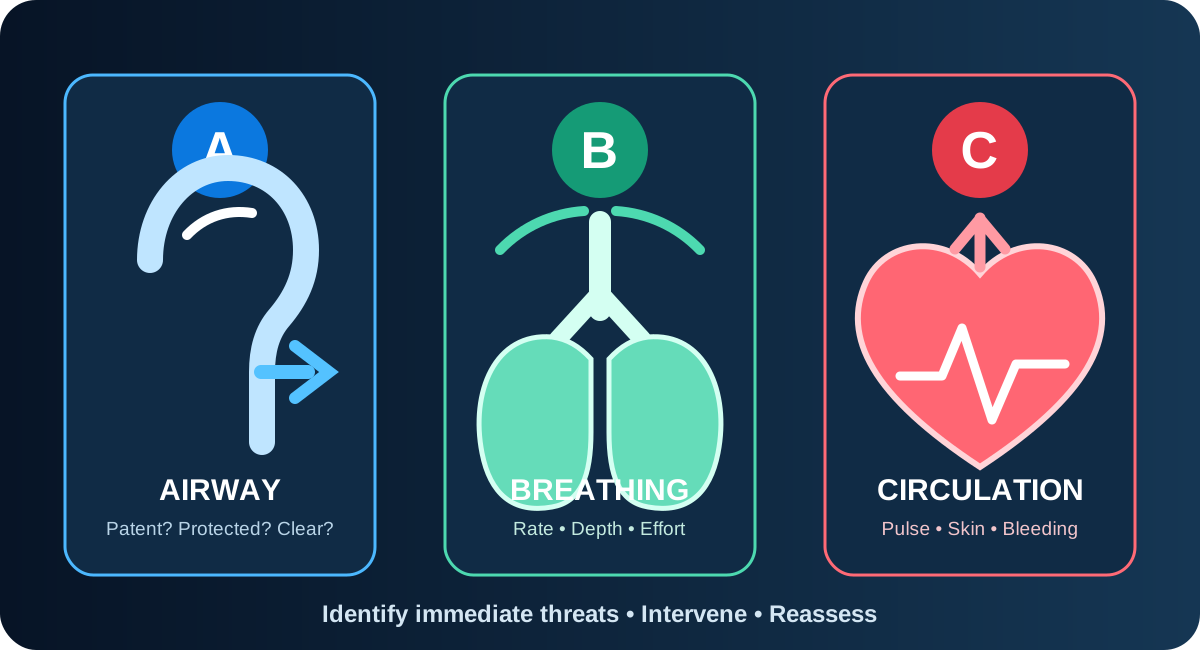
A patent airway is open enough for air to pass. Look for obstruction, swelling, secretions, blood, vomit, the tongue, trauma, or inability to protect the airway.
Learn airway cluesEMSCodeSim ABC Learning Center
Learn how to recognize immediate life threats, separate airway problems from breathing problems, identify poor perfusion, choose the next priority, and reassess after care.
Start here
The ABC approach helps organize the primary assessment. It does not replace scene safety, a general impression, responsiveness, full vital signs, history, local protocol, or repeated reassessment.
Choose your path
The center will direct you to the best page and connect you to the matching EMSCodeSim tools.
The three systems
A patent airway is open enough for air to pass. Look for obstruction, swelling, secretions, blood, vomit, the tongue, trauma, or inability to protect the airway.
Learn airway cluesBreathing assessment asks whether ventilation is adequate—not merely whether the patient is moving some air. Rate, depth, effort, chest rise, sounds, speech, and fatigue all matter.
Learn breathing cluesCirculation includes pulse, skin, mental status, blood pressure, capillary refill, major bleeding, and the overall evidence of tissue perfusion.
Learn circulation cluesImportant distinction
For a patient with signs of life, EMS assessment commonly organizes immediate threats as airway, breathing, and circulation. Once cardiac arrest is recognized, current AHA BLS care emphasizes chest compressions first—C-A-B—plus rapid AED use.
Identify and manage airway, breathing, and circulation threats while continuing the primary assessment.
Practice ABC assessmentActivate the response system, begin high-quality compressions, use the AED, and provide airway/ventilation care according to current training.
Open CPR centerConnected learning
These tools let learners practice separate findings before combining them in the integrated scenario page.
Respiratory rate, breath sounds, pulse oximetry, and capnography.
Pulse, skin signs, blood pressure, and full vital-sign documentation.
Bring findings together in full vitals, trauma, and medical patient scenarios.
Official references