Foundation only
This module prepares you to begin approved EMT education. It does not provide certification, course credit, local protocols, medical direction, or authorization to perform patient care.
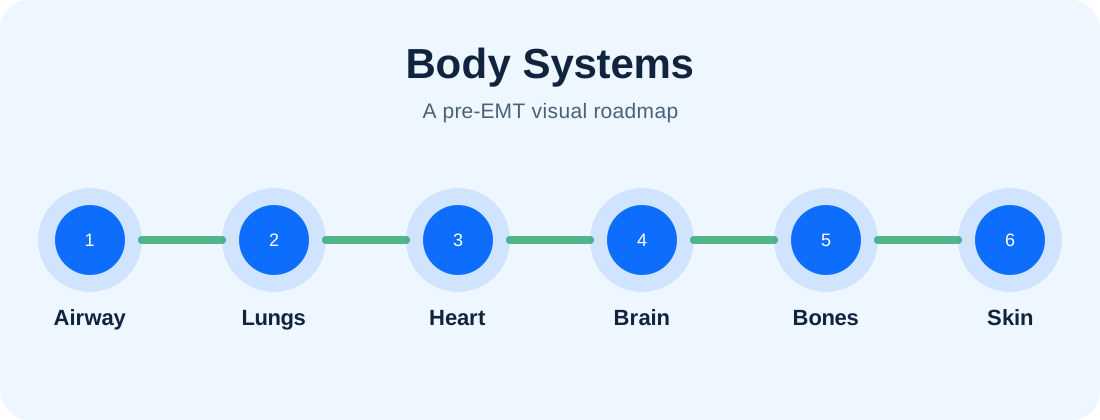
Learning objectives
- Explain the central concepts in plain language.
- Recognize common terms, observations, or equipment connected to the topic.
- Identify what must be learned later from an approved instructor.
- Complete the guided practice station, applied activity, and lesson-specific knowledge check.
1. Structure, function, and homeostasis
Anatomy describes structure; physiology describes function. Homeostasis is the body’s effort to maintain stable internal conditions. Illness and injury disturb that stability, and the body compensates through changes in heart rate, breathing, vascular tone, hormones, movement, and behavior. EMT students do not need to master every cell before class, but they should understand how systems depend on one another.
2. Respiratory system
Air moves through the upper airway, trachea, bronchi, and smaller passages toward alveoli. Ventilation is movement of air; oxygenation involves loading oxygen into blood; gas exchange moves oxygen and carbon dioxide across membranes. The diaphragm is a major breathing muscle. Work of breathing, chest movement, speech, skin signs, and mental status help reveal whether the system is meeting the body’s needs.
3. Cardiovascular system
The heart pumps through pulmonary and systemic circulation. Arteries carry blood away from the heart, veins return it, and capillaries support exchange with tissues. Pulse reflects a pressure wave, blood pressure reflects forces within the arterial system, and perfusion means delivering oxygenated blood to tissues. A normal-looking number does not guarantee adequate perfusion.
4. Nervous and endocrine systems
The brain, spinal cord, and peripheral nerves coordinate sensation, movement, consciousness, breathing, and automatic responses. The endocrine system uses hormones to regulate functions over time. Glucose regulation involves insulin and other hormones; stress responses can change pulse, breathing, skin, and mental status.
5. Musculoskeletal, integumentary, digestive, and urinary systems
Bones provide structure and protection, joints permit movement, and muscles create force. Skin protects, senses, and regulates temperature. Digestive organs process nutrients and include the stomach, intestines, liver, gallbladder, and pancreas. Kidneys regulate fluid and waste. Symptoms frequently cross systems, so assessment should avoid tunnel vision.
Put the lesson into practice
Choose shortness of breath and list at least four body systems that could contribute. Explain why assessment should avoid assuming one diagnosis.
Check your understanding
This is a readiness check, not a certification exam.
Helpful links and practice tools
OpenStax Anatomy & Physiology 2e
Open resource →MedlinePlus Anatomy
Open resource →Mark this module complete when ready
You should be able to summarize the lesson without reading it word-for-word and identify at least one area to revisit.