This prepares you to begin EMT school
It does not replace a state-approved EMT course, award certification or course credit, teach local protocols, or authorize patient care. Your school, state EMS office, medical direction, and agency remain the source of truth.
Your progress
0 of 12 modules
Progress is saved on this device.
Recommended next step
Start Module 1
Begin with the EMS system, the EMT's role, and what happens during a typical call.
Start Module 1Choose your pace
Complete the 12 readiness modules
Each module includes focused lesson sections, a guided interactive station, an applied activity, a unique knowledge check, saved notes, and links to relevant EMSCodeSim tools or authoritative resources.
Understanding EMS and the EMT’s Role
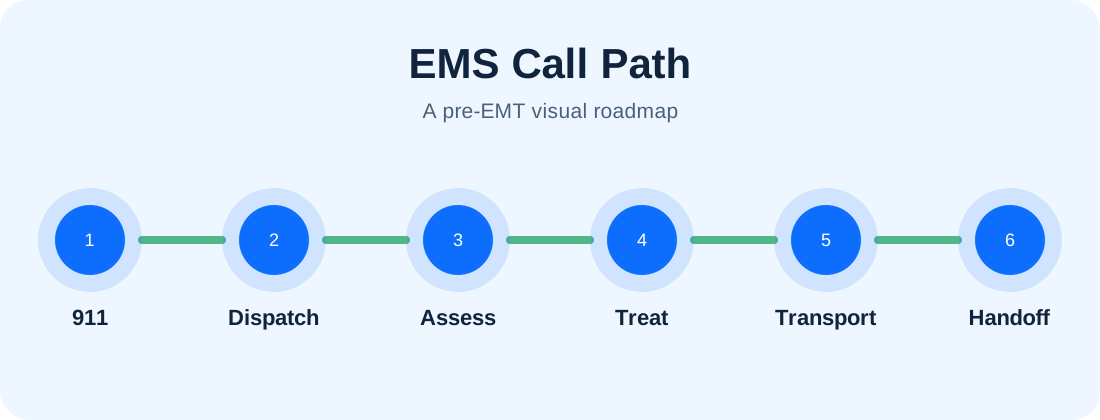
50–65 minutesFollow an EMS call from dispatch through handoff using interactive scenarios, role-matching, workplace previews, and a handoff builder.
What EMT School Is Really Like
70–90 minutesExperience a realistic first two weeks of EMT school with a workload simulator, learning-lane sorter, feedback practice, and skills-lab preparation.
Medical Terminology Foundations
75–95 minutesBuild and decode medical terms, practice anatomical directions, translate EMS language, and complete a terminology capstone simulator.
Anatomy and Physiology Foundations
45–55 minutesBuild a practical map of the major body systems and connect structure, function, homeostasis, and common EMS observations.
Vital Signs Foundations
150–190 minutesLearn how to take and document each vital sign through guided technique steps, error challenges, matching simulators, and a complete patient set.
Patient Assessment Foundations
60–75 minutesPreview scene size-up, primary assessment, history, focused assessment, vital signs, treatment, reassessment, and handoff.
Airway, Breathing, and Circulation Basics
55–70 minutesRecognize the concepts and equipment behind airway patency, ventilation, oxygenation, perfusion, bleeding, and shock.
EMS Equipment Orientation
50–65 minutesRecognize common assessment, airway, trauma, oxygen, and patient-movement equipment before entering a skills lab.
Communication and Professionalism
45–60 minutesPractice patient introductions, team communication, radio reports, handoffs, objective language, and respectful behavior.
Studying, Testing, and Skills Practice
45–60 minutesBuild a repeatable learning system using active recall, spaced repetition, short quizzes, skills practice, and feedback.
Physical, Emotional, and Lifestyle Readiness
35–45 minutesPlan for lifting, long shifts, disrupted sleep, distressing situations, support systems, and sustainable preparation.
Course Selection, Costs, and Enrollment
45–60 minutesVerify program approval, compare schedules and policies, estimate total costs, and prepare required documents.
Use simulators, flashcards, and scenario tools
Practice terminology, vital signs, assessment language, and equipment recognition.
Resource libraryOpen curated official and free learning links
National Registry, EMS.gov, MedlinePlus, OpenStax, state resources, and EMSCodeSim tools.
Final readiness profileCheck knowledge and personal preparation
Receive strengths, areas to review, and recommended next steps—not a pass/fail certification score.