Foundation only
This module prepares you to begin approved EMT education. It does not provide certification, course credit, local protocols, medical direction, or authorization to perform patient care.
Learning objectives
- Explain the difference between lecture, skills lab, clinical experience, field experience, written testing, and practical skills testing.
- Estimate the real weekly time needed for class, travel, study, skills practice, work, family, sleep, and recovery.
- Practice responding productively to instructor feedback and early signs of falling behind.
- Build a realistic two-week EMT-school plan before entering a full scenario.
1. Know the six parts of EMT education
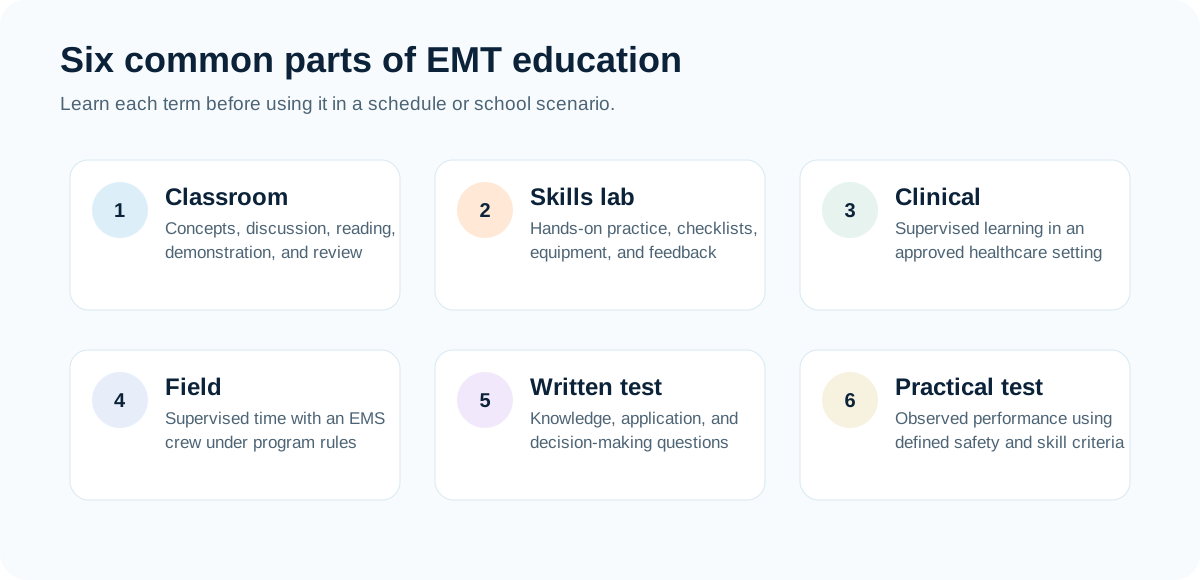
Before working through a school scenario, learn the terms that describe where EMT education happens and how students are evaluated. Programs use different schedules, but these six learning environments are common.
Classroom or lecture
Instructor-led teaching, discussion, demonstrations, assigned reading, and review of concepts such as assessment, medical emergencies, trauma, and operations.
Skills laboratory
A controlled practice space where students learn and repeat hands-on skills with equipment, classmates, manikins, checklists, and instructor feedback.
Clinical experience
Supervised learning in a healthcare setting, such as an emergency department or another approved patient-care environment. Requirements vary by program and state.
Field experience
Supervised time with an EMS crew where students observe or participate according to program rules, preceptor direction, and their authorized student role.
Written or cognitive testing
Questions that evaluate knowledge, application, and decision-making. These may include quizzes, unit exams, final exams, and certification testing.
Practical or psychomotor testing
Evaluation of how a student performs and explains a skill. A practical station usually uses a defined sequence, safety expectations, and performance criteria.
2. See how the course demands overlap
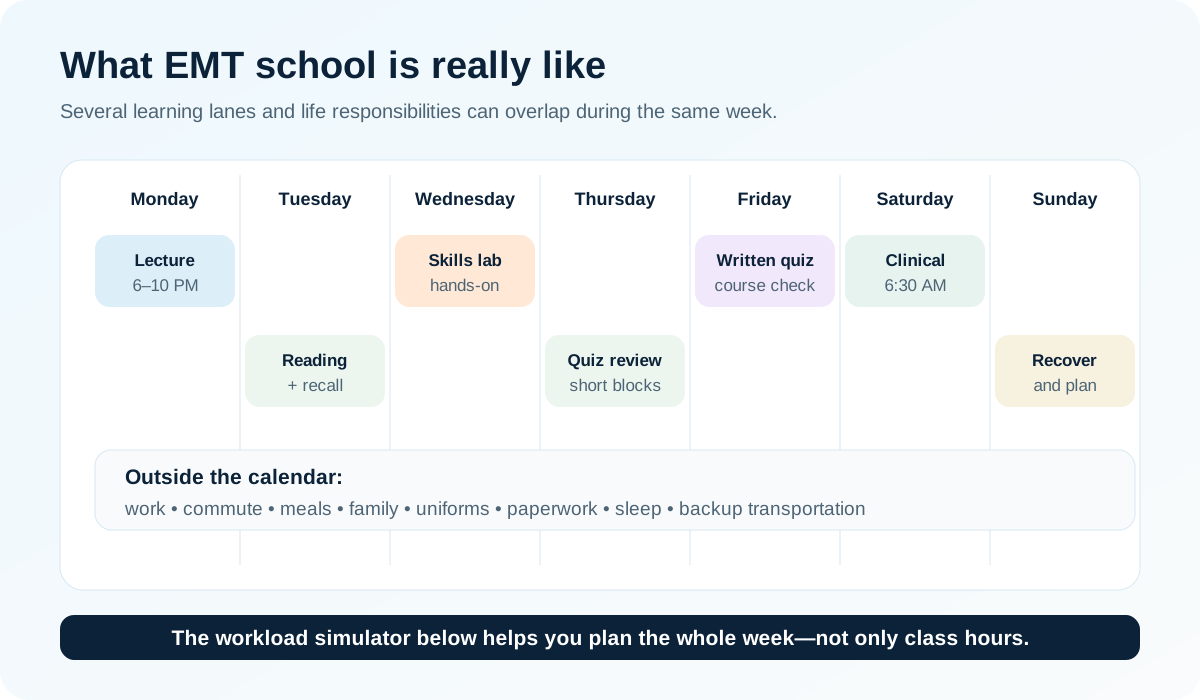
EMT school does not happen in one lane at a time. A student may attend lecture, prepare for a lab, study for a quiz, arrange transportation, work a regular job, and complete clinical requirements during the same week.
Preparation before class
Assigned reading and brief review make it easier to follow demonstrations and ask useful questions.
Practice after class
Skills and assessment sequences improve through repeated, focused practice—not by watching one demonstration.
Logistics matter
Travel, childcare, meals, uniforms, paperwork, and sleep can become course problems when they are not planned early.
3. Calculate the real weekly commitment
Published class hours are only part of the commitment. A realistic plan includes travel, assigned reading, active recall, skills practice, clinical or field time, work, family responsibilities, meals, sleep, and recovery.
The simulator below does not determine whether you can or cannot attend EMT school. It helps expose conflicts early enough to create backups and ask the program better questions.
4. Learn how to use correction productively
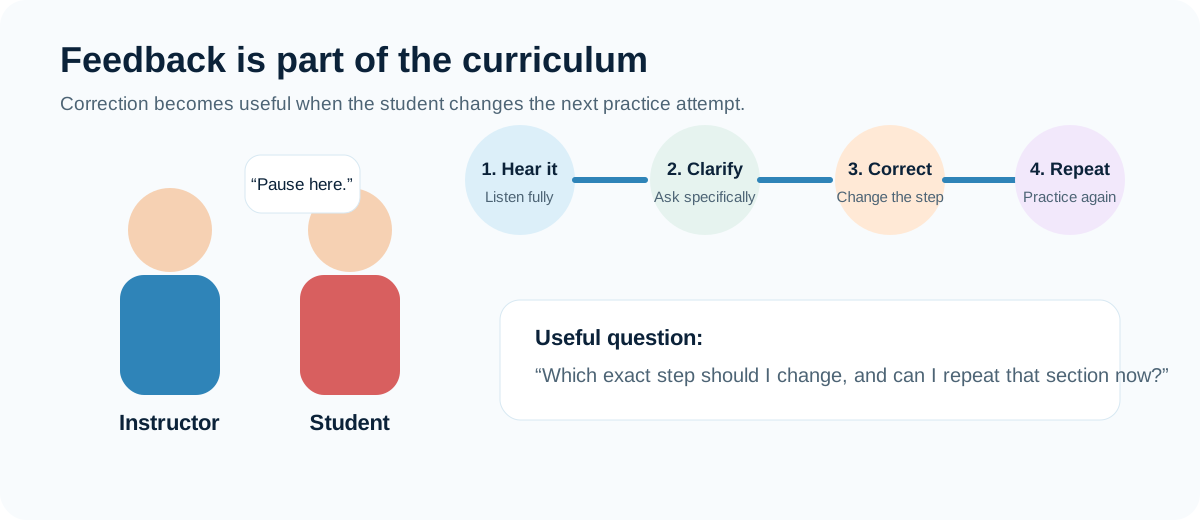
Feedback is information about performance. In a skills lab, an instructor may stop a student, point out a missed safety step, change hand placement, ask for clearer communication, or require the entire skill to be repeated.
Productive response
Pause, listen, identify the exact missed step, ask a focused question when needed, and repeat the skill with the correction.
Unproductive response
Argue before understanding the feedback, blame the evaluator, avoid the skill, or repeat the same method without changing anything.
Use this four-step feedback loop
Hear it → Clarify it → Correct it → Repeat it. Confidence grows when the corrected performance becomes repeatable.
5. Recognize when you are beginning to fall behind
Falling behind usually develops through several small warning signs rather than one sudden failure. Common signs include unfinished reading, repeated low quiz scores, avoiding a difficult skill, missing class, losing track of deadlines, poor sleep, or being unable to explain concepts without looking at notes.
The safest response is early and specific: identify the problem, contact the appropriate instructor or support person, schedule focused practice, and protect the next required deadline. Waiting until the final exam reduces the available options.
6. Prepare for hands-on practice
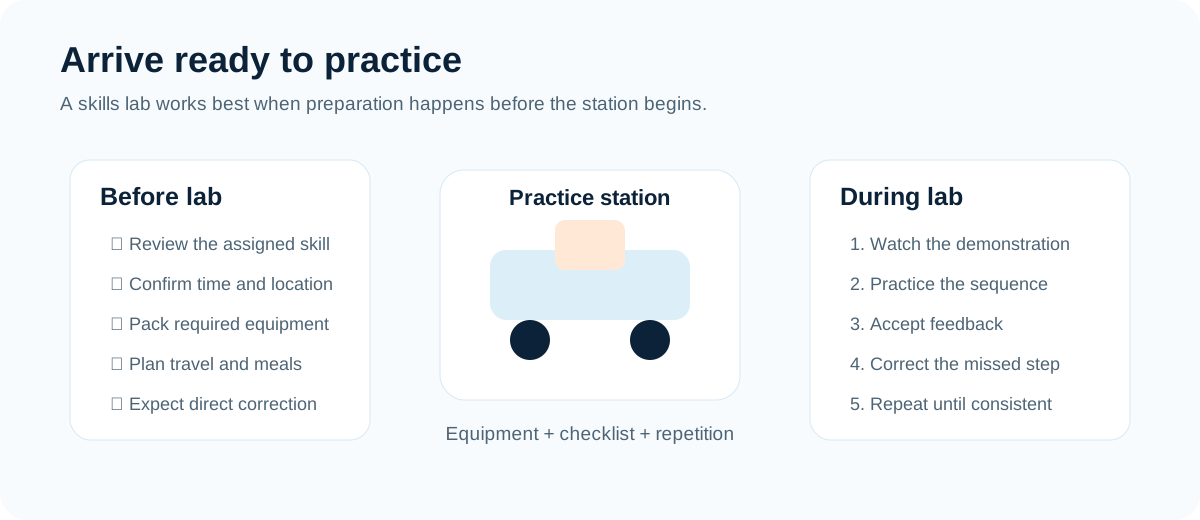
A skills lab is not simply free time with equipment. Students may rotate through stations, follow checklists, practice with partners, verbalize decisions, receive instructor correction, and demonstrate safe performance.
Before the lab, verify the required clothing, equipment, preparation assignment, attendance rules, and whether the program expects a watch, stethoscope, eye protection, notebook, or other items.
Build your first two weeks of EMT school
Use the planner to combine class, preparation, skills, logistics, and support into a realistic opening plan. Your responses save only on this device.
Check your understanding
This quiz covers only terms and concepts taught above.
Helpful links and practice tools
National EMS Education Standards
Open resource →EMT School Success Guide
Open guide →EMT Program Cost Tool
Open calculator →EMT School Finder
Open finder →Mark this module complete when ready
You should be able to define the main parts of EMT education, explain the real weekly workload, and describe how you will respond to feedback or early difficulty.