Scenario 1: Gurgling trauma patient
An unresponsive trauma patient has gurgling respirations and blood visible in the mouth. A carotid pulse is present.
Integrated ABC scenarios
Apply the concepts from the assessment and skills pages. Identify the immediate threat, choose the next priority, and state what must be reassessed.
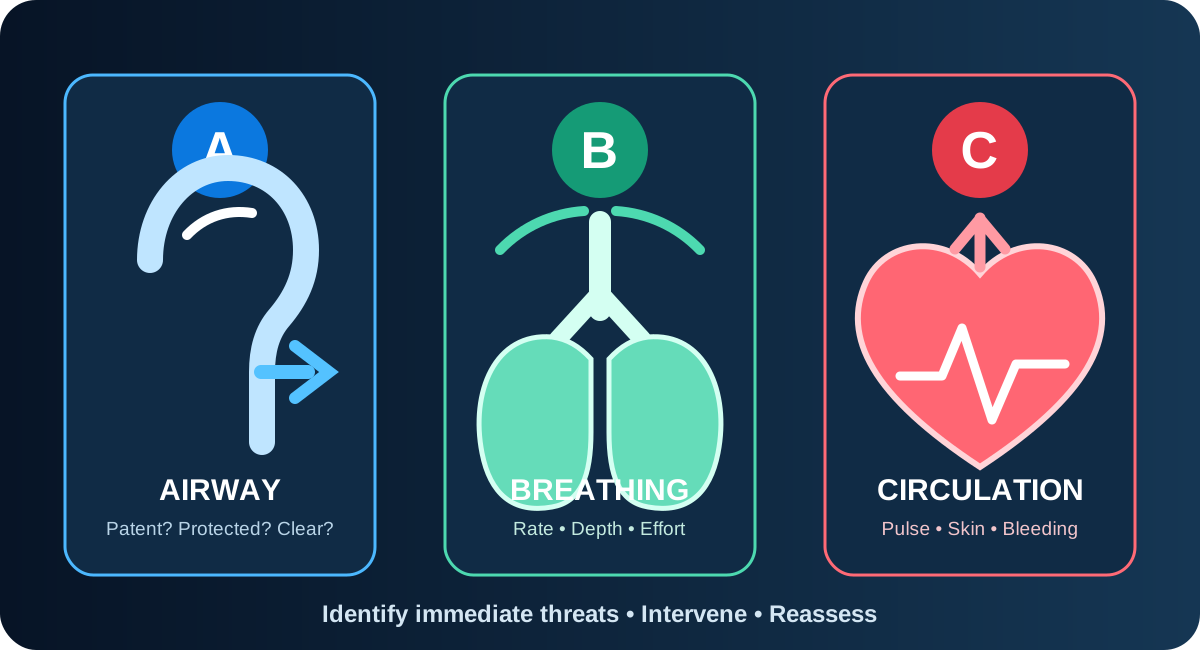
Before the cases
1) Identify the immediate threat. 2) Provide the appropriate intervention within training and protocol. 3) Reassess the airway, breathing, circulation, mental status, and response. 4) Continue the full assessment and make the transport/resource decision.
Scenario set
An unresponsive trauma patient has gurgling respirations and blood visible in the mouth. A carotid pulse is present.
A patient with severe respiratory distress is now drowsy. Respirations are shallow, chest rise is poor, and wheezing is barely audible.
After a fall, a patient is restless, pale, cool, and clammy with a rapid weak pulse. The initial blood pressure is still 112/72.
An adult collapses, is unresponsive, is only gasping, and has no pulse.
A patient has facial swelling, hoarse speech, wheezing, hives, and a weak rapid pulse after eating.
An unresponsive patient has a definite pulse but is not breathing normally.
Handoff builder
Select the findings and the page will build a sample primary-assessment statement. This helps learners avoid vague phrases such as “ABCs okay.”
Continue practicing
Practice assessment decisions and patient handoff in a broader medical scenario.
Open simulatorDocument objective findings after the immediate threats are addressed.
Open full vitalsPractice the separate C-A-B cardiac-arrest pathway and AED sequence.
Open CPR center