Too fast, too slow, or stopping
Rate must be interpreted with age, condition, depth, effort, and mental status.
Primary assessment
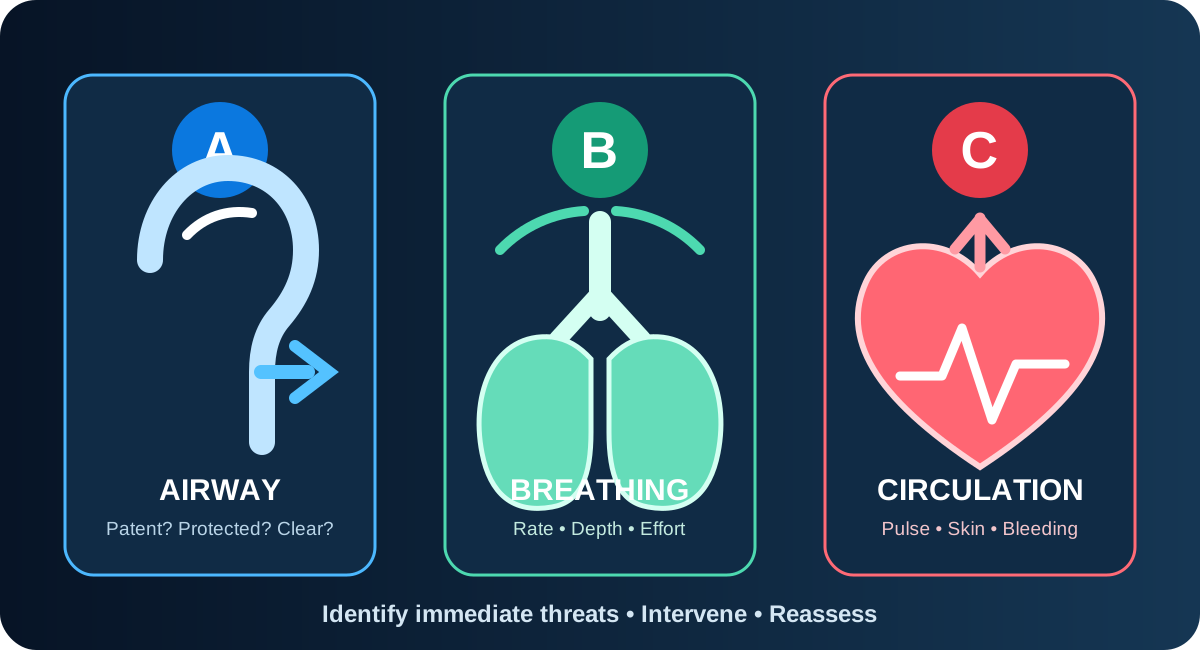
Use the body map, ABC tabs, checklists, randomized threat finder, and knowledge check to build a fast but complete primary-assessment routine.
Visual roadmap
The picture shows common areas of attention, but the assessment is not limited to one body location. Listen, look, feel, compare, and integrate the whole patient.
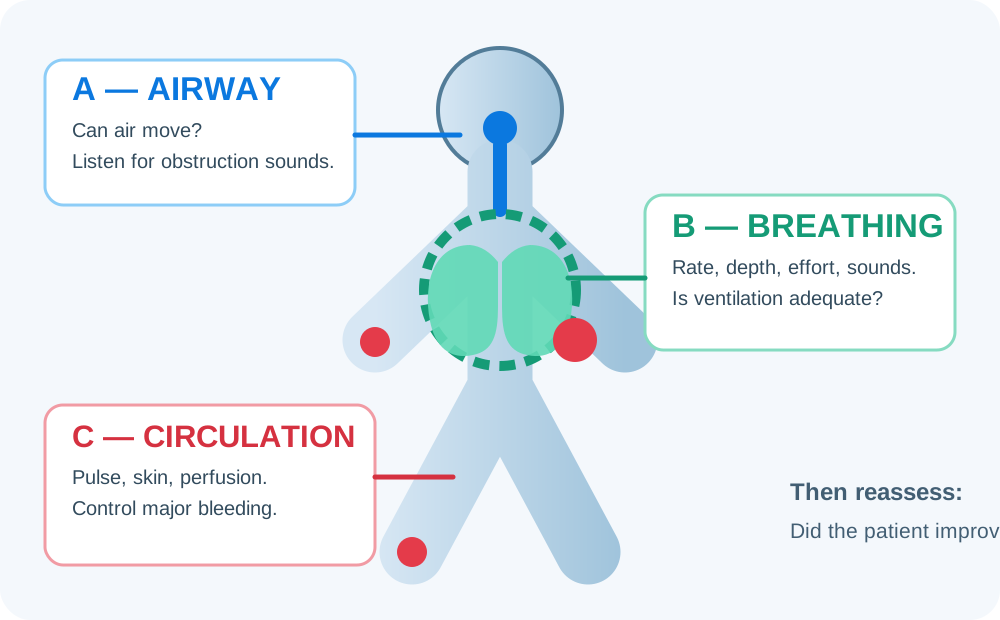
A — Airway
B — Breathing
Look for effective chest rise and air movement. A patient may be breathing but still require immediate ventilation support.
Rate must be interpreted with age, condition, depth, effort, and mental status.
Small breaths may not move enough air even when the respiratory rate looks acceptable.
A tiring patient can shift from distress to respiratory failure as effort and air movement fall.
C — Circulation
Shock can be developing before hypotension appears. Pulse, skin, mental status, bleeding, capillary refill, and trend are all useful.
A rapid weak pulse may support a shock concern; a very slow or irregular pulse may also impair perfusion when symptoms are present.
Pale, cool, clammy, cyanotic, mottled, or abnormally flushed skin can add important context.
Rapidly identify and control life-threatening bleeding rather than waiting for a full set of vital signs.
Interactive threat finder
Each case uses terms introduced above. Choose A, B, C, or C-A-B for cardiac arrest.
Knowledge check