Position and open
Use the airway-opening maneuver appropriate to the situation and training. Head-tilt/chin-lift is commonly taught when trauma is not suspected; jaw-thrust is commonly taught when cervical injury is a concern.
Skills and intervention priorities
Review common ABC interventions, equipment purpose, limitations, and the requirement to reassess. Physical skills must be taught and evaluated by an approved instructor.
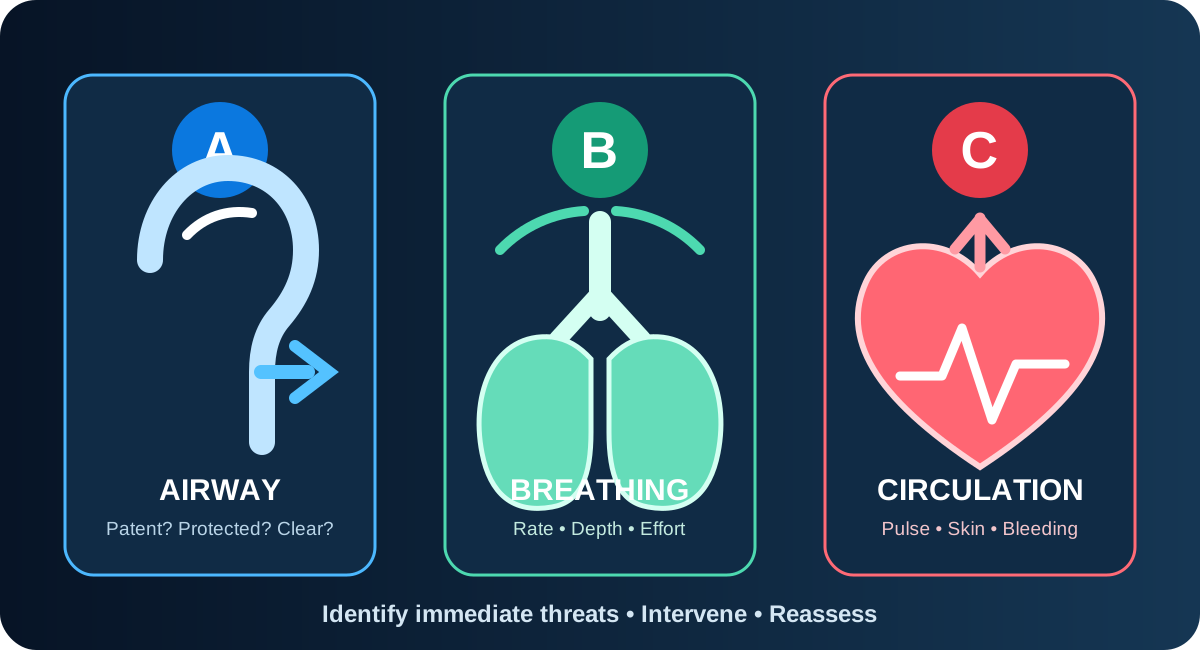
Principle
Equipment does not replace assessment. Oxygen does not open an obstructed airway. An airway adjunct does not guarantee adequate ventilation. A normal blood pressure does not rule out shock.
A — Airway priorities
Use the airway-opening maneuver appropriate to the situation and training. Head-tilt/chin-lift is commonly taught when trauma is not suspected; jaw-thrust is commonly taught when cervical injury is a concern.
Remove visible material when appropriate, suction blood/vomit/secretions, and provide current choking care for severe foreign-body obstruction.
Airway adjuncts may help maintain patency in selected patients, but they require correct sizing, insertion, ongoing monitoring, and formal instruction.
B — Breathing priorities
Use a position the patient can tolerate when appropriate, expose enough to assess chest rise, and continuously watch effort, speech, fatigue, SpO₂, and ETCO₂ when available.
A bag-valve mask is used when breathing is absent or inadequate. A good mask seal, open airway, visible chest rise, and avoiding excessive ventilation are essential.
Provide oxygen when indicated by the patient and protocol. Oxygen alone cannot correct apnea, severe hypoventilation, or a blocked airway.
C — Circulation priorities
Use direct pressure, wound packing where authorized, pressure dressings, or a tourniquet according to training and the wound location.
Treat the cause, keep the patient appropriately warm, minimize delay, monitor mental status and perfusion, and arrange transport/resources based on severity.
When cardiac arrest is recognized, activate the response, begin high-quality CPR, apply an AED, and follow current BLS training.
Open CPR Learning Center →Equipment explorer
Airway-clearing equipment.
Oropharyngeal airway.
Nasopharyngeal airway.
Ventilation equipment.
Oxygenation support.
Extremity bleeding control.
Arrange the workflow
Move each step into the lower row in order. Click a selected step to return it.
Practice the findings
Review airway foundations, respiratory rate, breath sounds, pulse oximetry, and capnography.
Practice pulse, blood pressure, skin signs, and full vital-sign documentation.
Apply assessment priorities in the ABC scenario page and medical simulator.