Anterior view
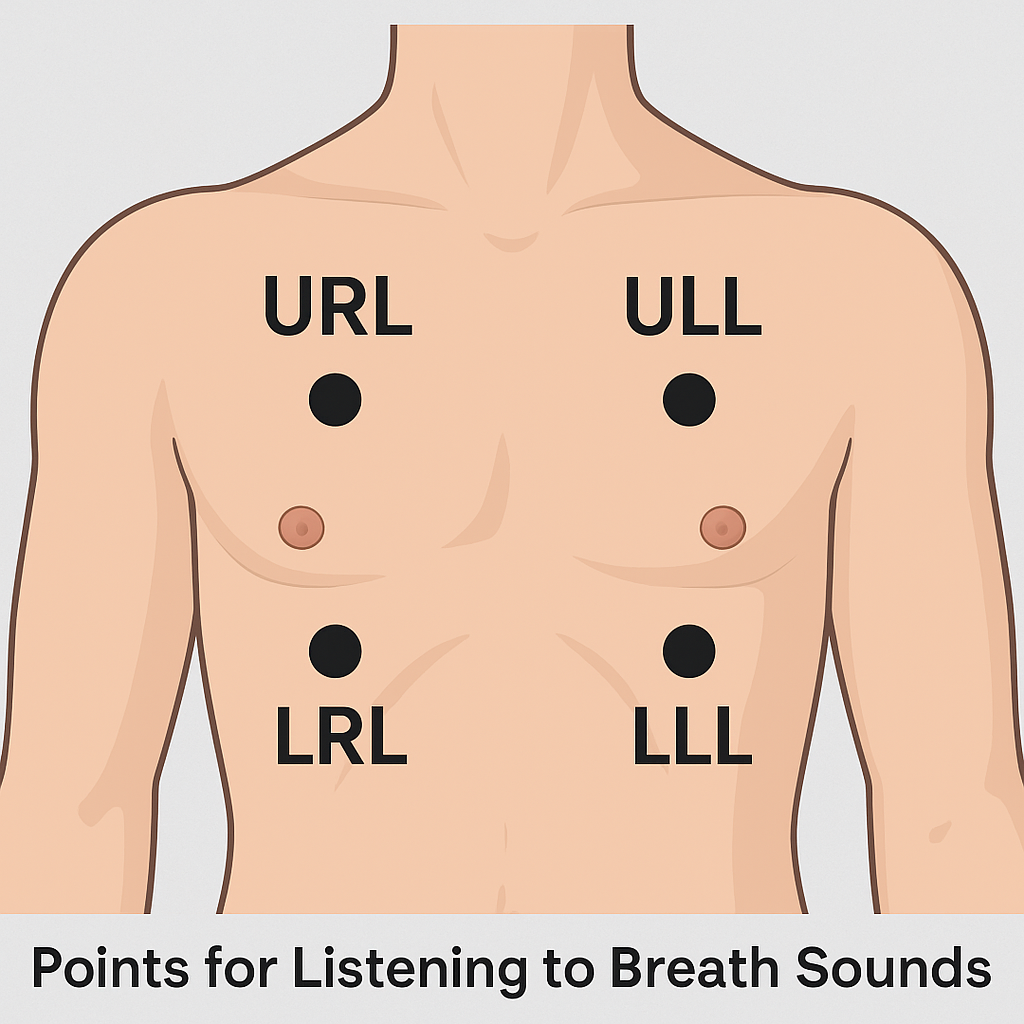
Listen above and below the clavicles, then move down the chest while comparing matching sides.
Breath sound auscultation skills
Learn patient positioning, stethoscope technique, anterior and posterior listening locations, the side-to-side ladder, and objective documentation.
Picture guide
Compare the same height on the right and left before moving down. Most lower-lobe tissue is best heard posteriorly and laterally.
Listen above and below the clavicles, then move down the chest while comparing matching sides.
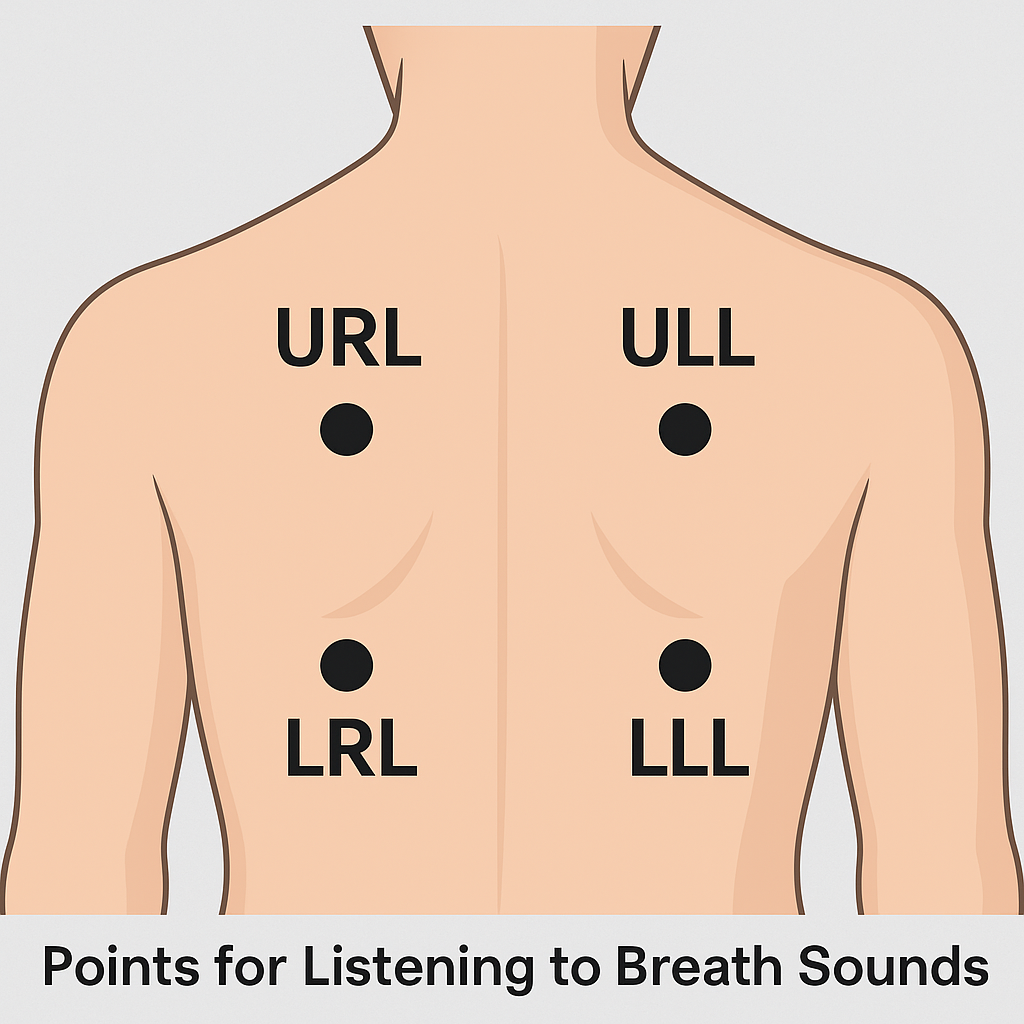
Ask the patient to cross the arms if able so the scapulae move laterally and expose more lung tissue.
Technique
Sit the patient upright when possible. Listen on skin, not through clothing, while preserving dignity and warmth.
Pause conversation, move tubing and clothing away from the diaphragm, and limit ambient noise when possible.
Warm the stethoscope and place the diaphragm firmly against the skin without pressing painfully.
Ask the patient to breathe slightly deeper than normal through an open mouth. Watch for dizziness and allow breaks.
Hear one complete inspiration and expiration at each location before moving.
Move in a ladder pattern between matching right and left locations so asymmetry is easier to notice.
Document location, phase, quality, intensity, symmetry, and changes after coughing, repositioning, or treatment.
Where are you listening?
Start above the clavicles, then compare matching upper and lower fields side to side. Avoid listening directly over bone when possible.
Arrange the steps
Move all seven steps into the lower row in the order you would use them.
Common errors
Apply the skill
Rotate the patient, choose different left and right findings, and tap lung-field or neck locations.